The Spiritual Journey Through Earth’s Heartbeat
The Opening: A Frequency Beyond Words
There’s a moment—maybe you’ve felt it—when a song stops being sound and becomes a conversation between your soul and something larger than yourself. Not something out there in the stratosphere, but something beneath your feet. Something that hums through the soil, whispers through the leaves, and pulses through every living thing.
This is the territory of earth-centered music—a sacred sonic realm where artists become vessels for nature’s voice, and listeners transform into witnesses of something holy.
If you’ve ever wondered why certain songs make you feel held rather than just heard, why they seem to understand your deepest yearnings without using a single word you can define, then this article is for you. We’re about to explore three extraordinary songs that prove music isn’t just entertainment. It’s a spiritual technology. It’s prayer in frequency form.
Let’s begin where all things begin: with the earth beneath us.
Understanding Earth Music: What We’re Actually Listening To
Before we dive into the specific songs, let’s talk about what earth music really is—and why it hits different.
Earth-centered music exists at the intersection of several sonic territories: ambient music emphasizes tone and atmosphere over traditional musical structure or rhythm, using textural layers of sound that can reward both passive and active listening. But earth music goes deeper. It’s not just about creating atmosphere—it’s about creating communion.
Earth music weaves together:
- Atmospheric production (creating vast, open sonic space)
- Indigenous & ancestral wisdom (honoring the knowledge of those who came before)
- Biophilic design in sound (using frequencies and instruments that echo nature itself)
- Spiritual & meditative intention (music made with healing as the guiding principle)
- Electronic & organic fusion (blending technology with the raw sounds of the living world)
Think of it as the musical equivalent of standing barefoot in a forest at dawn. There’s intention. There’s presence. There’s a recognition that you’re part of something much bigger.
As the environmental philosopher David Abram writes in The Spell of the Sensuous, “The more we experience ourselves as separate from the earth, the more likely we are to destroy it.” Earth music is a direct antidote to that separation. It’s a remembering. A coming home.
The Three Sacred Songs: A Journey Into Earth Remembering

When you listen to these three songs—“Root of the Earth” by Liquid Bloom, “Agua Pura Vida” by Murray Kyle, and “Unci Maka” by Ayla — you’re entering three doorways into the same house. They’re different rooms, different atmospheres, but the foundation beneath them all is the same: a yearning to remember what we’ve forgotten.
Liquid Bloom creates what can only be described as aquatic earth music. When “Root of the Earth” opens, it sounds like rainfall falling through silence, or perhaps it’s synthesized to suggest rainfall. There’s no clear boundary between manufactured and natural—because we live in that boundary now. The track layers environmental sounds with a hypnotic rhythm that feels less like music you listen to and more like music you become part of. It works for meditation, but also for the 3 AM moments when you question whether you belong anywhere at all.
There’s a reason this song resonates with so many people right now: we are becoming increasingly disconnected from our literal roots. The average person spends 87% of their time indoors, separated from soil, separated from the foundation that holds us. Our mental health crisis, our anxiety epidemic, our collective sense of dislocation—none of this is accidental. We’re plants trying to thrive without earth. Liquid Bloom understood this at a soul level. The song is a remembering ceremony that says: You belong to the earth. Your body is made of the same elements as trees, soil, stone. The neuropsychologist Bessel van der Kolk notes in The Body Keeps the Score that trauma literally disconnects us from our bodies. Earth music can help reconnect those severed pathways.
Then there’s Murray Kyle’s “Agua Pura Vida” (Pure Water Life)—music that feels ceremonial without appropriating, respectful of indigenous wisdom while speaking to contemporary hunger. The song features water as both instrument and metaphor: actual recorded water—streams, rain, ocean—woven into production. But also the concept of water as the universal solvent, the giver of life.
In many spiritual traditions—from Taoism to modern neuroscience—water represents flow, adaptability, and consciousness itself. Listen closely and you hear flowing synthesizers that feel like water moving; gentle percussion like drops and tides; vocals emerging from the water itself. The production suggests something profound: your consciousness and the water you drink are not separate things. You drink the world. The world drinks you back.
The idea that water responds to intention is spiritually resonant but scientifically disputed. Masaru Emoto’s water crystal experiments have been criticized for lacking rigorous scientific methodology, and biochemist William Reville wrote, “It is very unlikely that there is any reality behind Emoto’s claims.” But there’s a crucial difference between “scientifically unproven” and “poetically false.” The metaphorical truth remains: water transforms with interaction. It reflects. It adapts.
What is measurable: The 7.83 Hz Schumann frequency aligns with alpha waves (8-13 Hz), associated with relaxed wakefulness and creativity. Water naturally conducts frequencies. The human body is 60% water. When we listen to music incorporating water sounds, we’re having a conversation with ourselves at a cellular level. Murray Kyle understood this intuitively—whether or not water literally responds to sound, our nervous systems certainly do. And that’s medicine.
Finally, Ayla’s “Unci Maka” invokes “Grandmother Earth” in Lakota—not metaphorically, but as prayer. A direct call to the earth as a living, conscious, ancestral entity. When Ayla creates this music, she’s not making yoga studio background ambient. She’s leading a ceremony. Calling something forward. Asking the earth to remember us, and asking us to remember the earth.
What makes this work so important is how it honors indigenous perspectives while working in contemporary electronic frameworks—this is cultural continuation, not appropriation. The song incorporates traditional instruments and vocal approaches rooted in indigenous music, blended with contemporary production that makes it accessible and immediate. The spiritual intention guides everything.
In Lakota philosophy, as in many indigenous traditions worldwide, the earth is not a resource. It’s a relative. It’s kin. “Unci Maka” sings this kinship into existence.
We live in an age of ecological grief. We understand—at some level—that we’re destroying the systems that sustain us. We feel this weight. “Unci Maka” doesn’t offer false comfort. Instead, it offers relationship. It says: Even if you’ve forgotten how to listen, the grandmother is still there. Still calling. Still patient. Still waiting for you to remember. This is profound spiritual medicine.
All three songs—rooted in soil, flowing through water, calling to grandmother earth—operate on a shared frequency. They’re not separate songs. They’re chapters in a single conversation between you and the living world.
The Thread That Binds: A Shared Language
What connects “Root of the Earth,” “Agua Pura Vida,” and “Unci Maka” is this: They all speak a language that predates words.
This is the language of:
- Frequency and vibration (the earth does communicate through measurable vibration)
- Silence and space (what’s not played is as important as what is)
- Presence without demand (these songs don’t try to convince you; they invite you to witness)
- Time beyond the clock (they operate in sacred time, not measured time)
Musicologist and neuroscientist Daniel J. Levitin notes that music creates synchronization between listeners—our brainwaves begin to align. When we listen to earth music together, we’re not just hearing sounds; we’re synchronizing with each other at a neurological level.
The Schumann Resonance: Earth’s Frequency (What We Know & Don’t)
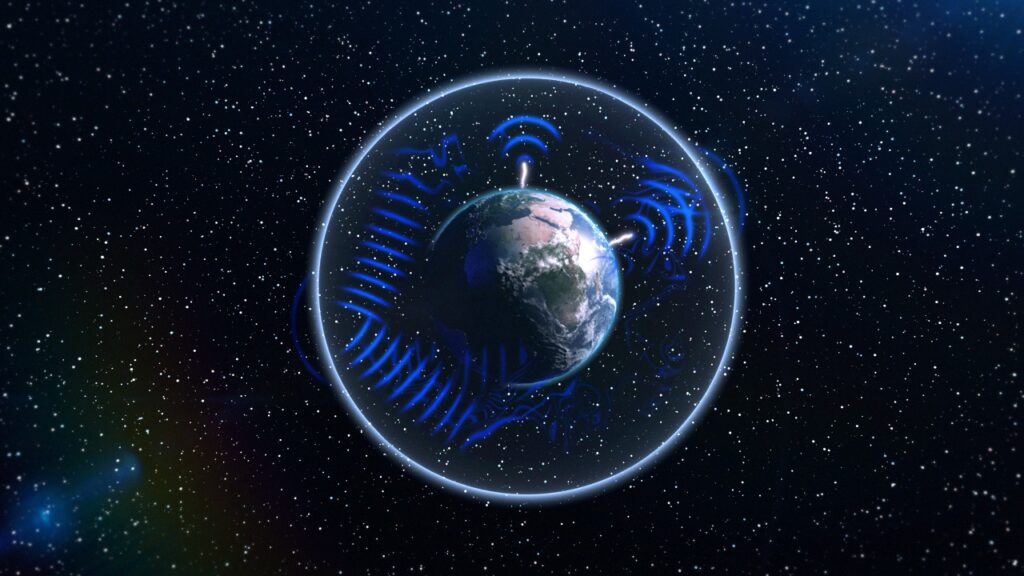
The Schumann Resonances are electromagnetic standing waves formed in the spherical cavity between the surface of the Earth and Earth’s ionosphere, with frequencies at 7.83 Hz (fundamental), 14.3, 20.8, 27.3 and 33.8 Hz. This was discovered by German physicist Winfried Otto Schumann in 1952.
Here’s where it gets important to be honest: The link between Schumann Resonance and human consciousness appears real but modest. Strong claims about the resonance “shifting consciousness” or “rewriting DNA” are not supported by current evidence.
However, there are some measurable findings:
The 7.83 Hz Schumann frequency is within the same range as alpha waves (typically 8-13 Hz), which are associated with relaxed wakefulness, creativity, and stress reduction. Some research suggests the human brain is sensitive to the effects of Schumann resonances and reacts by changing its functional state in accordance with the frequencies of impact.
But—and this is crucial—effects appear small in peer-reviewed studies, and the natural Schumann signal at the surface is far weaker than ordinary household electromagnetism.
What does this mean? Earth music might work not because of some mystical “Earth frequency” connection, but because:
- The music operates at frequencies that align with relaxed brainwave states (which is still powerful)
- The intention behind the creation creates genuine healing
- The act of slowing down to listen has measurable psychological benefits regardless of frequency
Indigenous cultures have known for millennia that nature heals. Modern science is slowly catching up to understand how. The mechanism matters less than the result: these songs help us feel more alive, more connected, more whole.
The Science & Soul: Why Both Matter
Let’s address the elephant in the room: Do we need science to validate spirituality, or do we need spirituality to validate science?
The truth is both/and.
When we listen to earth music, measurable things happen in our bodies:
- Heart Rate Variability increases (a sign of nervous system resilience)
- Cortisol levels decrease (our stress hormone backs off)
- Brain wave coherence improves (especially in the alpha range associated with meditation and flow states)
- Immune function strengthens (chronic stress suppresses immunity; music relieves stress)
But also, unmeasurable things happen:
- We remember ourselves as part of something larger
- We grieve what we’ve lost and celebrate what remains
- We feel held by the universe
- We reconnect with our own aliveness
Both are true. The scientific validity of earth music’s healing properties doesn’t diminish its spiritual power. If anything, it deepens it. Our biology is spiritual technology.
As Carl Jung said: “Until you make the unconscious conscious, it will direct your life and you will call it fate.” Earth music brings the unconscious—our deep attunement to the living world—back into consciousness.
How to Listen: A Practical Invitation
If you’re new to earth music, here’s how to approach these songs:
1. Create Physical Space
Find somewhere you can actually be on the earth, even if it’s just an open window with a plant. Our bodies know the difference between “nature sounds” and actual nature. But if nature isn’t available, these songs work anywhere—they carry earth’s frequency within them.
2. Listen Without Purpose
Don’t meditate to it. Don’t work to it. Just listen. No agenda. No destination. This is crucial. Earth music is about being, not doing.
3. Notice What Arises
Emotions might come up. Grief, joy, longing, peace—often simultaneously. This is the music working. Don’t resist it. You might cry listening to “Unci Maka.” That’s not sadness. That’s recognition.
4. Repeat
These songs reveal themselves slowly. The first listen is barely an introduction. By the fifth or sixth time, you’ll begin to hear layers you missed. You’ll notice the subtle shifts in frequency, the intentional use of space, the spiritual architecture beneath the surface.
5. Share It
Earth music is communal medicine. Listening together, in the presence of others, amplifies its power. Your synchronized heartbeats become part of the frequency.
The Bigger Picture: Spirituality as Remembering
Here’s something crucial: Spirituality isn’t about acquiring something new. It’s about remembering something you’ve always known.
You existed before you were born—as possibility, as star-stuff, as the universe experiencing itself. You were the forest before you were the person listening to it. Every atom in your body has been recycled through countless forms: rivers, mountains, trees, animals, humans.
Spiritual music, particularly earth-centered music, is a sonic reminder of this continuity.
When Liquid Bloom creates “Root of the Earth,” he’s describing a state you’ve already experienced. Roots don’t feel alien to you because you are rooted. You just forgot.
When Murray Kyle sings about Água Pura Vida, he’s inviting you to remember that you are the water. Consciousness experiencing consciousness.
When Ayla calls “Unci Maka,” she’s calling something you already know by heart.
The Invitation Forward
So here’s where we land.
You’ve likely heard music designed to make you buy things, to make you feel less-than, to distract you from your own emptiness. Earth music does the opposite. It’s anti-commercial, anti-distraction, for the wholeness that’s already within you.
Every time you press play on of this kind of music you’re participating in a quiet revolution. You’re saying: I remember. I’m listening. I’m here.
You’re synchronizing with the earth’s frequency. You’re joining millions of others who, right now, are doing the same thing. You’re part of a global consciousness that’s remembering its connection to itself.
The earth doesn’t need you to fix everything. It just needs you to listen. To remember. To love it back.
These songs are the soundtrack to that remembering.
A Final Word: The Frequency You’re Carrying
You are not separate from the music you listen to. Your body is a resonating chamber for every frequency you absorb. Choose them carefully. Choose them intentionally.
When you listen to earth music, you’re not just passing time. You’re literally tuning your nervous system, your heart rate, your brainwaves, your spiritual antenna to the frequency of alive, conscious, loving presence.
That’s not metaphorical. That’s biology.
That’s soul.
That’s the work.